Takatekote is a bondage in which the hands are tied behind the back. This binding is also known simply as TK.
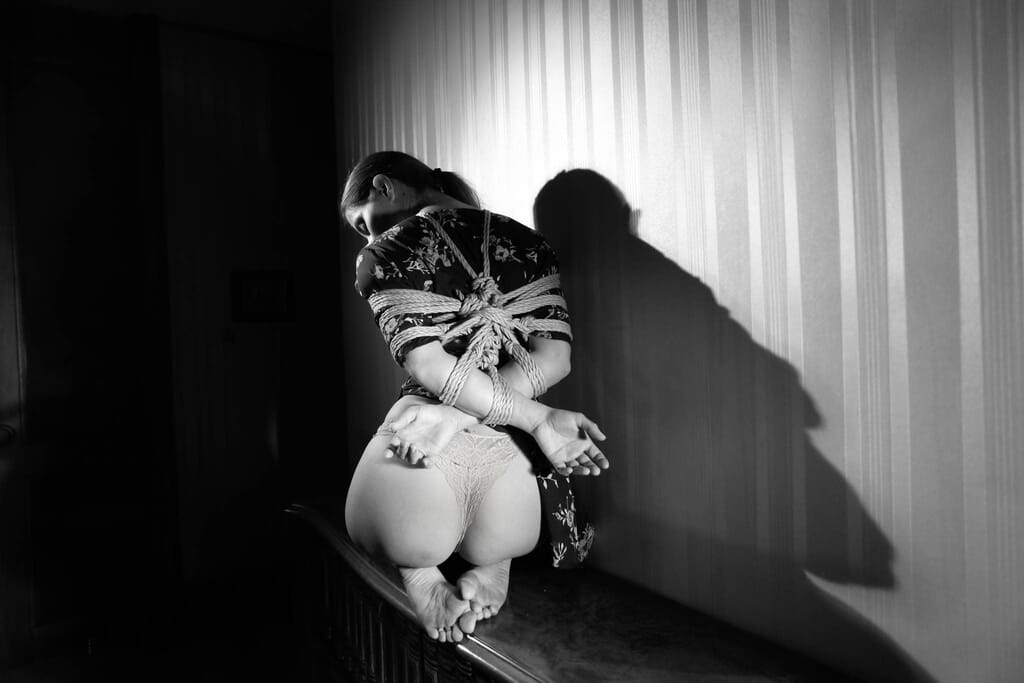
It is an iconic ligature of each style of shibari and kinbaku. Each master has refined one over years of practice, making it almost their signature. Often the different ways of linking the arms in this position are named after the master who perfected them. (Osada TK, Naka TK, Kanna TK…)
Takatekote in the bondage courses
During our bondage courses we teach a tradionally inspired takatekote trying to enhance safety standards, but retaining the austere beauty of traditional Japanese aesthetics.
Philosophy of Takatekote
First of all it is important to tie in seiza, the Japanese way of sitting. In this way the back is upright, shoulders relaxed, breathing natural. The seiza is a versatile position, which allows the top to move nimbly on the knees and toes, and the bottom to relax completely, and maintain a passive attitude.
The wrists are tied tightly, high behind the back. Immediately the hands are no longer free to move, and they communicate to the bottom the feeling of being under the control of the top.
Hands provide food. Feeling one’s hands tied tightly produces a very strong emotional response in the mind of the person who is tied.
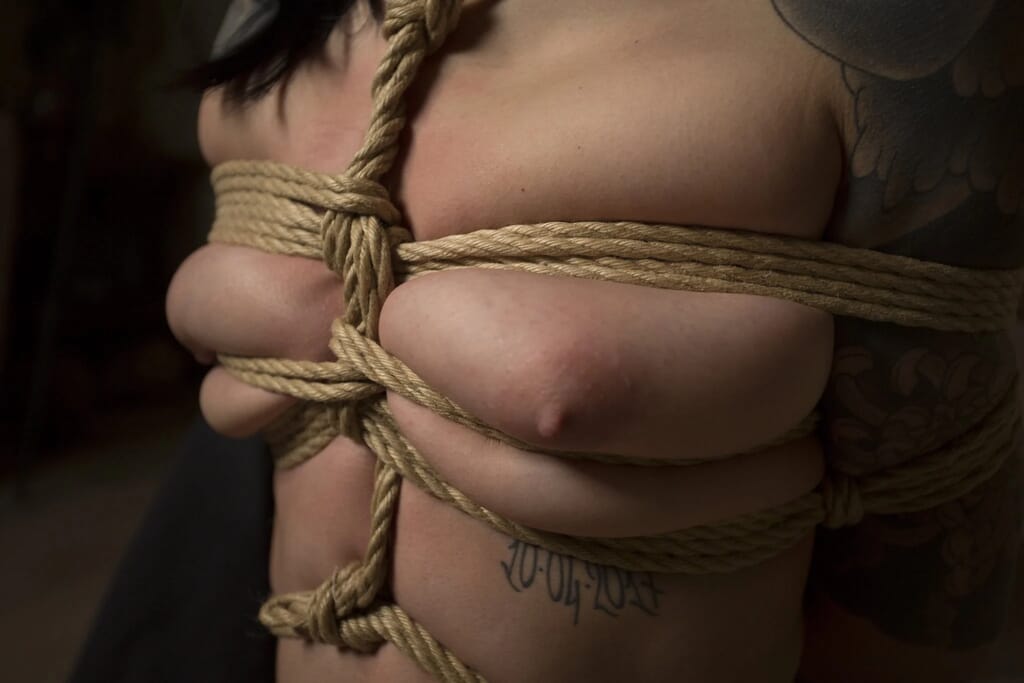
In other styles, the rope around the wrists is supposed to be left softer, to allow the tied person to seek a more comfortable position. In this specific takatekote, however, there is no way to seek relief; it is necessary to accept the challenge that the rope poses to the body, and to live the experience in a spirit of acceptance, trusting in the partner’s abilities and his desire to care for the bound person.
Once the wrists are tied, the rope encircles the shoulders, tight. The top keeps its distance as it wraps around this first rope, emphasizing with physical distance the consensual exchange of power that the parties are enacting. The one who binds takes control, and the one who gets bound relies completely on the partner. Physical distance underscores this aspect in this crucial step.
Second rope
The second string wraps up close, in a sensual motion. It passes under the breast (or under the breastplate) and brings erotic imagery back to the surface.
Some takatekote instead bond by keeping their distance throughout the process, others are very physical and require constant proximity between partners. This one specifically seeks harmony between the physical sensations, and the emotional content conveyed.
To conclude, the ropes that pass under the chest, are tightened securely by a lacing that closes behind the back. This passage is called a “kannuki,” which means “bar,” like the one we might use to lock a heavy door. The purpose of the kannuki is precisely to “bolt” the bottom inside, with a message that leaves no doubt: he is now completely locked in and confidently accepts the will of the top, certain of the latter’s care and compassion.

Precautions
Takakote is a tie that requires care. If done poorly it can easily result in radial nerve compression. Be sure to study takatekote with an experienced instructor.