Japanese bondage, commonly referred to by the term Shibari, uses rope to restrict movement, alter posture and create a physical and emotional connection between two people. Precisely because it acts directly on the body, it can involve risks that are important to understand and learn to recognize.
Safety is a prerequisite, not the goal
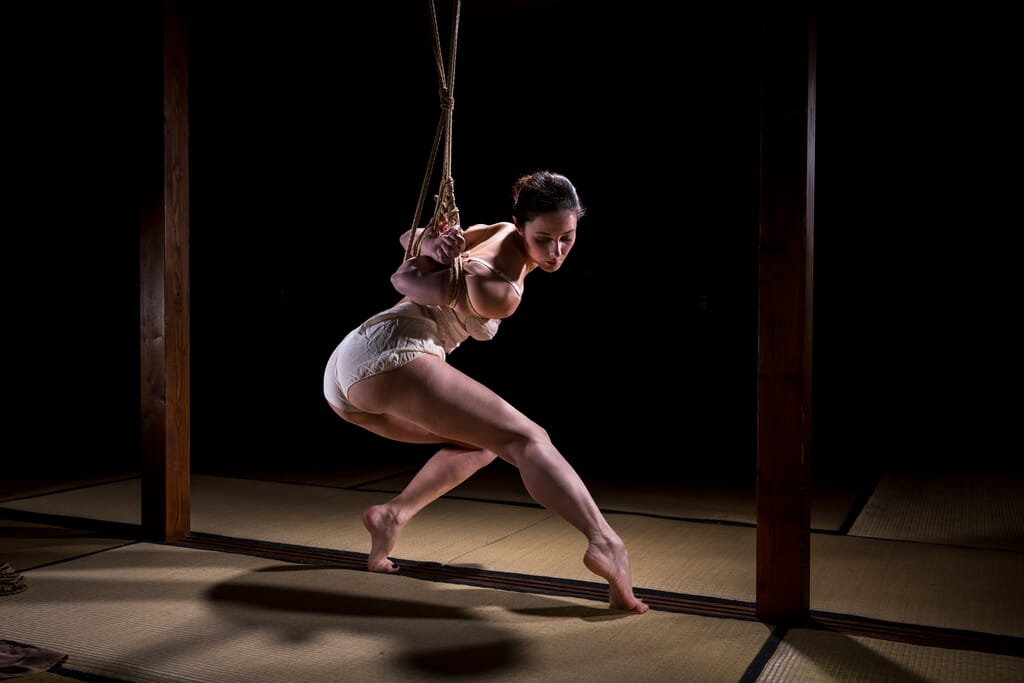
Safety is a prerequisite of Shibari, not its ultimate purpose. Understanding anatomy, knowing how ropes affect the body and being able to recognize warning signs creates the conditions in which what we actually seek during a session can emerge: pleasure, intensity, connection, surrender and that particular aesthetic of Kinbaku that arises from the encounter between rope, body and emotion.
Safety is therefore not the content of the experience itself, but what allows us to experience it with greater awareness.
Absolute safety does not exist
Any activity that subjects the body to restraint, tension, demanding positions or suspension involves a certain degree of risk. Even with good preparation, a sound understanding of anatomy and careful management of a session, that risk can never be completely eliminated.
Shibari should therefore be practised only by adults who are aware of their own decisions, their physical and emotional condition and the level of risk they are willing to accept.
Being aware of risk does not mean ignoring or trivializing it. It means recognizing that every choice made during a session involves a balance between what we want to experience and its possible consequences.
Some effects of restraint are predictable and may fall within the level of risk accepted by many practitioners. They are not necessarily the purpose of the tying, nor are they inherently a desired part of the experience: they are simply things that can happen. The important skill is learning to distinguish a temporary and predictable consequence from a warning sign that requires us to modify or stop what we are doing.
Blood circulation
One of the most visible effects of tying the limbs is a change in blood circulation.
The pressure exerted by ropes can restrict venous return in particular. As a result, a hand or foot may temporarily become redder, darker or purplish. A change in colour, considered on its own, does not necessarily mean that arterial blood flow to the limb has been completely compromised and is not automatically a reason to release the tie immediately.
Instead, it is important to observe the overall combination of signs and how they develop over time.
An extremity that becomes unusually pale or very cold, abnormal or increasing pain, progressive loss of sensation, obvious weakness or difficulty moving requires attention. No single indicator can replace an overall assessment of the person.
The duration of compression also matters: a condition that may be tolerated for a limited period should not automatically be considered acceptable if maintained for longer.
Nerve compression
Nerve compression is one of the most important risks associated with rope bondage and can be less obvious than a circulatory problem.
A rope can place pressure on a nerve even while the limb continues to receive sufficient blood flow. For this reason, skin colour should not be used as the only indicator of whether a tie is safe.
Persistent tingling, numbness, altered sensation, unusual electric sensations, or loss of strength or motor control may indicate nerve compression.
The appearance of weakness deserves particular attention: if someone can no longer perform a movement normally that they were able to perform shortly before, this should not simply be regarded as an inevitable consequence of restraint.
A nerve injury can require a very long recovery time and, in more serious cases, may leave lasting consequences. For this reason, rope placement and knowledge of the anatomical areas that are particularly vulnerable are fundamental parts of learning Shibari.

Joints and the direction of force
A position may appear perfectly sustainable while the body is still and become problematic once the ropes are placed under tension.
What matters is not only the position of a joint, but also the direction in which force is being applied to it.
The knee, for example, is a joint adapted primarily to flexion and extension and tolerates certain lateral and rotational stresses much less well. A rope pulling the knee sideways can therefore place considerable stress on it even without apparently forcing it into an extreme position.
The same principle applies, in different ways, to the shoulders, elbows, wrists, hips and ankles.
It is therefore important not to ask only whether someone “can stay in that position”. We also need to consider what will happen when the rope is tensioned, when part of the person’s weight is transferred from one point to another, or when the orientation of the body changes.
In suspension, this assessment becomes even more important, because forces that are relatively small on the ground can increase significantly once body weight is transferred to the ropes.
Ribs, chest and vulnerable areas
The rib cage can also be subjected to significant pressure.
The lower ribs, including the so-called floating ribs, are areas that deserve particular attention. Highly concentrated pressure, unfavourable traction or loads applied in a direction poorly suited to the person’s anatomy can cause pain and injury.
This does not mean that the chest cannot be tied or loaded. It means that position, direction of force, the area over which the load is distributed and the individual characteristics of the person must all be considered together.
The same tie may be perfectly sustainable for one person and highly problematic for another.
Anatomical knowledge is therefore not about creating a list of universally “safe” and “dangerous” areas, but about improving our ability to understand the body in front of us.
Breathing and positional asphyxia
Some positions can make breathing progressively more difficult.
Breathing does not depend only on keeping the airway open. The ability of the chest and diaphragm to move is also important. Strong compression of the chest or abdomen, or a position in which the body can no longer expand comfortably, can make the work of breathing increasingly difficult.
This risk may increase over time and with fatigue.
Significant difficulty breathing, an obvious change in level of consciousness, confusion, sudden weakness or an inability to communicate normally require immediate intervention.
It is particularly important to remember that someone who is very fatigued or deeply emotionally involved in the session may not be able to describe precisely what is happening to them. This is why observation by the person tying remains essential.
The neck
The neck is one of the most vulnerable areas of the body and requires particular caution. As a general rule, a rope should never completely encircle the neck. Compression in this area can interfere with the airway and with blood flow to and from the brain, with consequences that can be rapid, severe and potentially fatal.
The risk cannot be assessed simply by the amount of pain experienced or by the presence of marks on the skin: dangerous compression may produce few visible warning signs before causing serious consequences.
There are highly specialized practices in which the neck may be deliberately involved, but these require specific expertise and carry a very high level of risk. For ordinary Shibari practice, the prudent rule is to prevent a rope from tightening or closing completely around the neck, including accidentally during a transition or suspension.
Suspension and the risk of falling
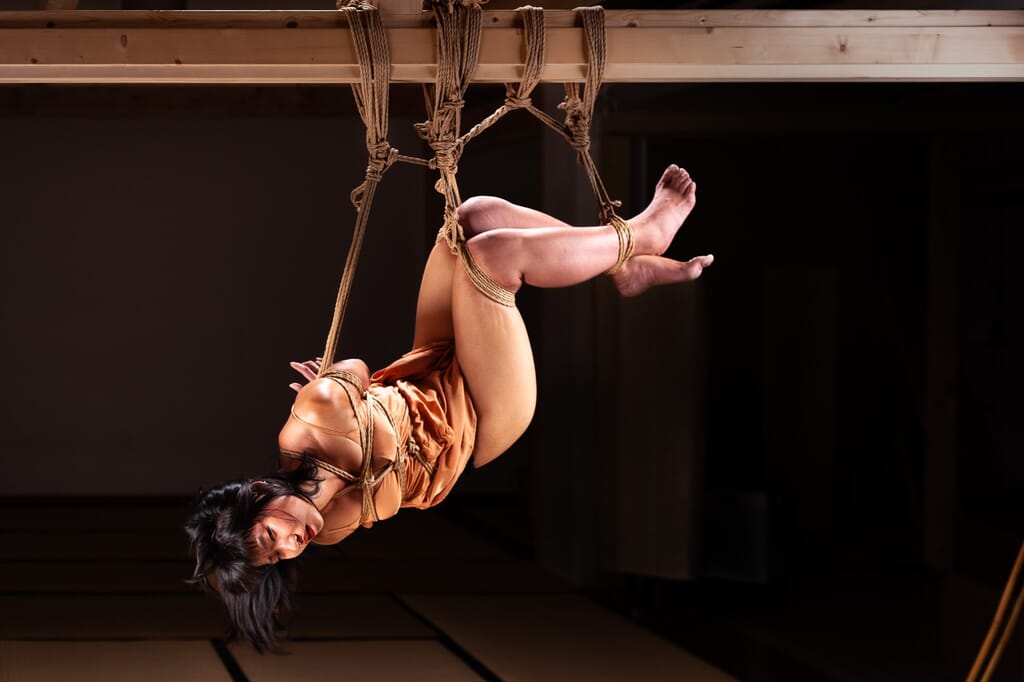
Suspension introduces another risk that is very easy to understand and potentially very serious: falling.
Accidents of this kind are fortunately rare, but they can happen. When they do, the problem is not necessarily the failure of the rope being used for tying.
A suspension is a system made up of many elements: ropes, carabiners, rings, slings, connecting devices, structures and the suspension point itself. The safety of the entire system also depends on the strength and correct installation of each of these elements.
Suspension points and anchors
In particular, a suspension point may appear extremely solid without actually being suitable for the task. A beam, ceiling structure or fixing may withstand a certain static load without difficulty and behave very differently when subjected to the dynamic loads generated by the movement of a suspended person.
For this reason, a suspension point intended to support people should not be assessed simply by looking at it. The structure, fixings and anchoring system should be installed or inspected by a suitably qualified professional.
The quality of the ropes and equipment is naturally important, but checking only what we can see between the person and the ceiling means forgetting that everything above the connection point is also part of the system.
Safety is a shared responsibility
A session involves at least two people, and responsibility for safety cannot be delegated entirely to only one of them.
The person being tied has a responsibility to communicate clearly and promptly when something is wrong. Unusual pain, fear, loss of sensation, difficulty breathing, weakness or emotional distress should not be minimized in the hope of “holding out a little longer”.
It is their own body, their own sensations and their own emotions. Learning to recognize personal limits and communicate them effectively is an important part of the responsibility of the person being tied.
Being a bottom does not mean giving up responsibility for one’s own safety.
At the same time, the person tying has an ongoing and important responsibility to observe and monitor. They must make sure that the other person is having a good experience, pay attention to physical and emotional changes and not rely exclusively on what is being verbalized.
A person may not immediately recognize what is happening to them, may not be able to describe it accurately, or may be so deeply involved in the session that they communicate less effectively than usual.
Communication is therefore essential, but it does not replace attention.
When both people genuinely do their part — one communicating honestly and promptly, the other observing, checking and continuously adapting the session — the available margin for exploration increases considerably.
Not because risk disappears, but because it becomes easier to recognize it and intervene before a situation exceeds the limits that both people had chosen to accept.
Physical and emotional safety
Not all the risks of Shibari are strictly anatomical.
Being restrained, temporarily giving up part of the control over one’s body, finding oneself in a vulnerable position or experiencing very intense sensations can also have a strong emotional impact.
For this reason, communication should not concern only pain, tingling or physical difficulties.
The person being tied should feel free to communicate fear, discomfort, sudden changes in emotional state or simply the desire to modify or end what is happening.
Likewise, the person tying must pay attention to the overall quality of the experience rather than simply checking that no obvious physical symptoms have appeared.
A technically flawless session that is experienced badly by the other person is not a good session.
Preparation, communication and the ability to intervene
Risk reduction begins before the first rope is applied.
Knowing the relevant physical conditions of the person, discussing limits, understanding what you intend to do and making sure that the environment and equipment are appropriate reduces the number of unexpected problems that need to be managed during the session.
Throughout the tying, it is important to continue observing and communicating.
The restrained person should not be left unattended, and the person tying should be able to modify or remove a tie quickly when necessary.
It is also useful to remember that risk changes continuously. A comfortable position may become difficult after several minutes; a rope can shift; fatigue can alter posture; someone may begin a session in excellent condition and gradually become less able to tolerate what they are doing.
Safety is therefore not something that is “checked” once at the beginning of a session. It is an ongoing process.
Reducing risk to make room for the experience
Safety in Shibari does not mean eliminating every intense sensation, every moment of vulnerability or every temporary consequence of restraint.
If that were the main objective, we would easily lose sight of why two people chose to share a session in the first place.
Reducing risk does not mean turning Shibari into a clinical exercise: it means creating the conditions in which technique can give way to an intense, engaging and emotionally powerful experience.
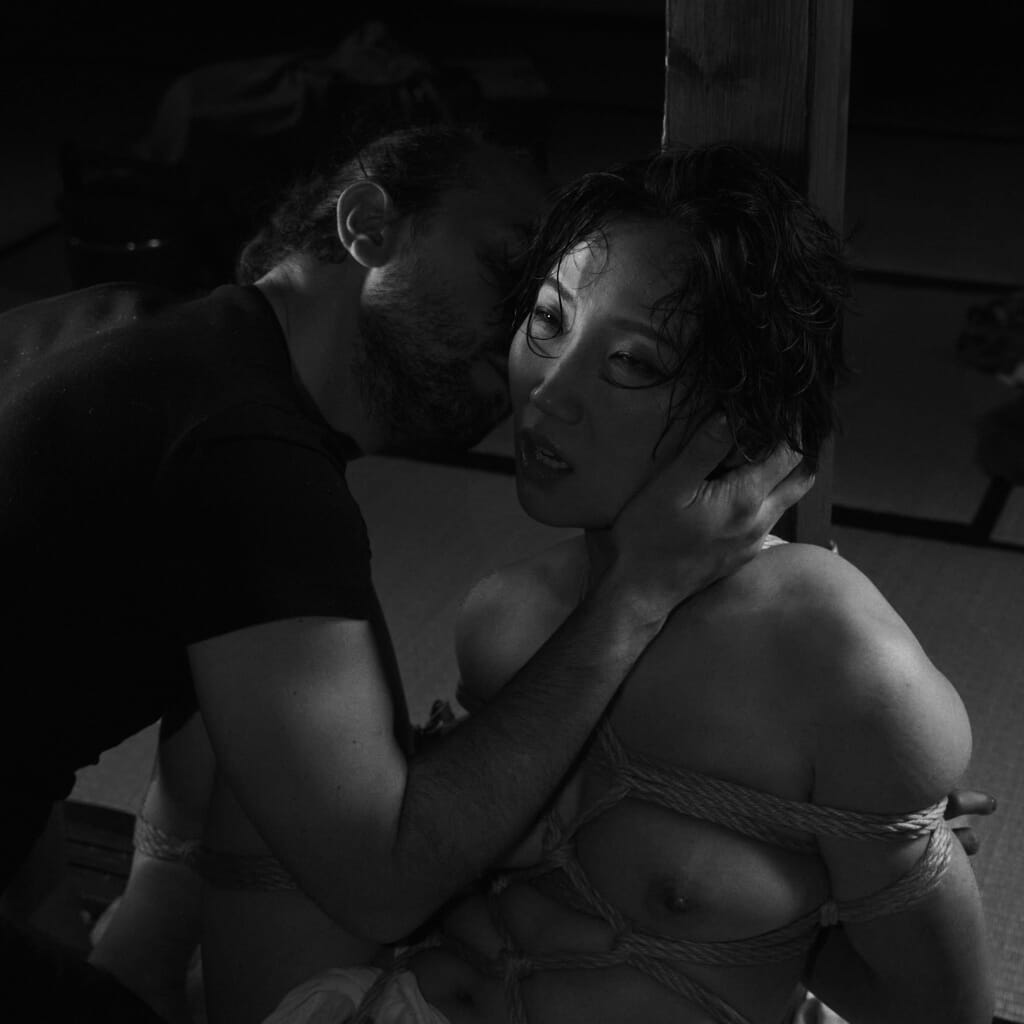
Safety supports connection, surrender, emotional tension and that subtle sense of vulnerability that can make a session particularly meaningful.
The aim is not to eliminate every element of challenge, but to allow it to be experienced with awareness, preparation and responsibility.
A good understanding of safety should not occupy the centre of the stage. It should allow the people involved to have enough confidence in their abilities, in their communication and in one another to focus on what makes Kinbaku interesting: the body, the relationship, the aesthetics and the emotions that can arise between two people connected by rope.