At the Yugen studio it is possible to participate in different kinds of events: classes, shibari parties, talk sessions, and more. Specific rules may vary depending on the type of event being held. We encourage you to inquire about them. In the meantime, you can read about some general rules on this page.
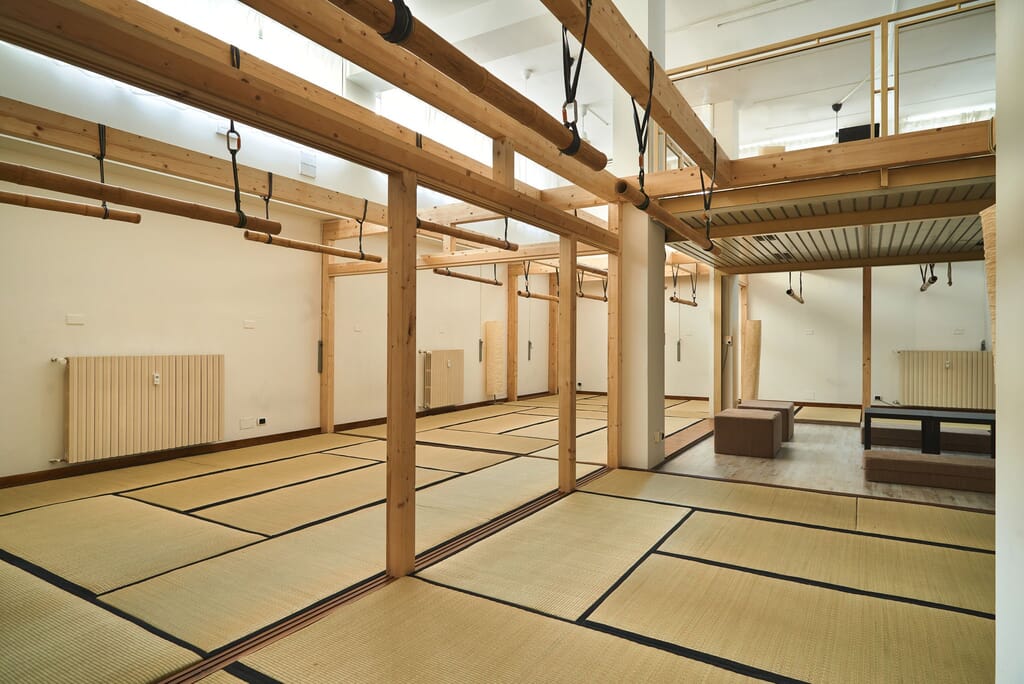
In any case, the purpose of any event is always to learn and have fun, spending pleasant moments with other associated people; studying Japanese culture in general and shibari in particular.
Anyone over the age of 18 can apply for membership and subsequently participate in shibari events and other social activities, always respecting the person, diversity, orientation and identity of others.
We do not tolerate any form of discrimination.
Points of reference
Within the space you will always find one or more responsible people who will be your point of reference for any doubts or problems.
At least one person experienced in rope bottoming will be present during beginner events to help you take your first steps in this environment. If you have general questions about the world of shibari and kinbaku, or if something does not make you comfortable, they are there for you.
Shibari parties are a great time to get to know experienced practitioners and ask them questions, but remember that the only points of reference are the people appointed by the association as those in charge of the space.
Explicit behavior and shibari parties
Depending on the type of event, certain situations may offend the sensibilities of some people.
For example, during some events it is possible for those attending to engage in sexually explicit and/or domination and submission behaviors. If witnessing these kinds of scenes offends your sensibilities, please contact us. We will point you to shibari parties that best suit your taste.
It is important for each associated person to make an informed assessment of the type of events in which he or she intends to participate. Kinbaku is a discipline characterized by intense interactions. It is important that participants approach it in an informed manner.
In any case, you can always immediately report any physical or emotional discomfort to those in charge of the space so that the people in charge can handle the situation.
Consent
Regardless of personal sensitivities, any interaction MUST be based on the explicit consent of all parties involved. Any violations of this simple rule should be reported to the person in charge of the event, who will handle the matter.
Having clear communication about what you want or do not want is critical, whether it is shibari or other game dynamics. Do not assume that a person is available just because you have seen him or her interact with other people. Don’t feel you have to interact with someone you don’t like just because they seem experienced or important.
Always ask permission before approaching anyone. Before initiating any kind of interaction, take time to consider consent management with all parties involved.
Always remember that you do not have to accommodate or pander to the wishes of others. If you do not want to do something or talk to a person, point it out to the person in front of you without fear. If you are uncomfortable with it tell the person in charge of the current event. The people in charge are there to help you with anyone who becomes pushy.
We do not tolerate people who pressure others through repeated requests to interact.
Sobriety
The presence of people under the influence of substances prohibited by law is not tolerated, nor is the introduction of such substances into the association’s spaces.
Consumption of alcohol is prohibited before and during classes.
Moderate consumption of wine or beer is permitted during recreational events. Never of hard liquor.
You should avoid engaging in a session if you have drunk too much, or if you take medications that interfere with lucidity and psychophysical faculties.
Shibari is a dangerous activity. Constant risk assessment and management of a possible emergency are not compatible with artificially altered states of consciousness.
Safeword
Regardless of the agreements between the parties, red (“rosso”) is always a valid safeword. When a safeword is pronounced, the current session must immediately stop.
If you need help, speaking a safeword aloud will draw the attention of those who will have heard you; staff and other participants, who can intervene if necessary.
If a safeword is repeated three times in a row (e.g., “red red red!”) the session must end immediately and permanently. It is not permissible to reinstate the session before all parties involved have fully recovered, and in any case never during the same event.
Remember that safeword is not a magic word. If you are in distress and you say the safeword, it will still take time to release and restore the situation. If you feel uncomfortable, it is best to stop the scene before you are at your limit. A margin of safety is always necessary.
Distinguish between moments
Lesson, playtime or shibari session are different moments. Knowing how to distinguish between them is essential. Some teaching moments require more intimate interaction, others do not. If you feel that your personal space is being invaded, point this out to the person with you. If the situation does not improve, or if you feel uncomfortable, point it out to the people responsible for the event.
All people are invited to constructive criticism of their own and others’ actions.
In any case, before addressing advice or criticism to a particular person, even with the best of intentions, make sure that it is welcome, and that that is the best time, by asking the person concerned if you can express yourself freely at that time.
Good manners and humility are the best calling card.
Conversation is among the main purposes of all events. However, the volume should not be such that it is annoying to those who are practicing. Silence is required during class demonstrations.
Privacy during shibari parties
Shibari events are intimate moments and should be respected as such.
It is important not to divulge names and personal information of those attending the events.
If you feel more comfortable you can introduce yourself with a nickname or stage name during events. Instead, the information provided at registration should always be the biographical information shown on official documents.
The photo policy may change depending on the event. In general, photos can only be taken if the person being photographed is in the frame, explicitly consenting, with no other person in the background. Before taking a photograph, always ask if the other person is happy to be photographed.
Shibari etiquette
Good manners are always the basis of any event, whether it is a class, talk, or shibari party.
First, it is important to respect the personal space of others. Do not interact with someone who is engaged in a session or has just finished untying. Do not disturb two people who are assessing consent for a future session.
Remember that even a greeting can be an annoying distraction during an intense session or important conversation.
Other general rules of good coexistence are:
- Remove shoes and coats at the entrance
- Do not create clutter; bags go in the space provided on the mezzanine floor
- Keep a low tone of voice and phones on silent mode
- If you make anything dirty with wax, liquids or use equipment that is not yours, clean it up at the end of the session
- When you go to the bathroom, wear the slippers that are outside the door, and then leave them where you found them
Clothing
For technical classes, those who get tied up usually wear tight-fitting clothing. Leggings, shorts, and comfortable T-shirts make tying easier.
For aesthetic classes or recreational times, less sporty clothing may be better. Please check the description of each event.
Nudity during sessions or sexually allusive or explicit situations may be allowed during certain events. If this makes you uncomfortable, please contact us before each event to ascertain the specific rules about this.
Regardless of the type of event, nudity is never mandatory. Anyone can walk away if they feel uncomfortable.
Never remove a bound person’s clothes without his or her consent. Do not insist that another person be persuaded to undress or allow themselves to be undressed.
For those tying, comfortable clothes in general are ideal for being able to move around and sit on the floor.
Safety of shibari classes and parties
Shibari is a dangerous activity. We encourage you to study ways to improve the safety of your sessions.
The first rule of safety is good communication; verbal and nonverbal, before, during and after each interaction.
The time of conversation when consent is assessed is also a good opportunity to inquire about the other person’s health status, and to discuss the risk profile of the session.
Having safety scissors is always a good rule of thumb. The studio is equipped with several paramedic scissors. You can find them throughout the room, hanging from the pillars. Do not use them to cut excess rope; they are only available as a safety device.